
The domestic basic telephone network is expected to grow at a slow rate over the next few years owing to increased competition from cellular wireless services

Reflecting subdued global economic growth, India's outward foreign direct investment (FDI) fell by 33.3 per cent sequentially to $1.21 billion in August, compared to over $1.82 billion in July.

The second wave of the coronavirus pandemic is likely to delay recovery in air passenger traffic with an 80-85 per cent growth year-on-year this fiscal against the earlier estimate of 130-135 per cent, ratings agency ICRA said on Monday. The domestic passenger traffic, which witnessed a steady ramp-up after resumption of airport operations since May 25 last year and reached 64 per cent of the previous year levels in February, has again suffered a setback, the ratings agency said in a report. The spike in coronavirus infections towards March-end and April has resulted in several state governments implementing fresh restrictions, resulting in a marginal 0.7 per cent de-growth sequentially in traffic in March.
The domestic passenger traffic in July 2021 was 51 lakh, ICRA said in a release. Domestic passenger traffic on a year-on-year basis, however, spiked around 131 per cent over August 2020 traffic of 28.3 lakh, it said. The ratings agency said despite the continued recovery in the previous month, there is continued stress on demand, driven largely by the second wave of the pandemic, limiting travel to only necessary travel.

Banks have not cut rates yet as March is typically a busy season.

Instead of a rate hike, or even a pause, there could be a window for the RBI for an interest rate cut
Some say the MPC will raise the rate, while others are of the view that there is already de facto interest rate tightening through rising bond yields, which might prompt the central bank to go for a pause.
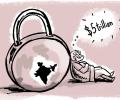
The wait for India to become a $5-trillion economic powerhouse by 2024-25 (FY25) is going to take longer than what the finance ministry had originally intended, according to the International Monetary Fund (IMF). The vision will instead be achieved in 2028-29 (FY29), reveals the IMF data, illustrating a four-year delay. Chief Economic Advisor (CEA) V Anantha Nageswaran had in February said India would become a $5-trillion economy by 2025-26 or the following year, on the back of 8-9 per cent sustained growth rate in real gross domestic product (GDP). However, the IMF data conveys that the economy will be $4.92 trillion in FY28, clearly alluding to the fact that the target will be realised in FY29.

However, Icra Rating Principal Economist Aditi Nayar feels that the numbers are a bit too optimistic and need real heavy-lifting by the Centre and the states. "The survey forecasts on real and nominal GDP will require a substantial push from Central and state spending as private sector capacity expansion is anticipated to be intermittent, and sector-specific in the next couple of quarters," she said. Nayar added that private consumption is likely to chart a differentiated recovery across income and age groups. Based on the comments made in the Survey, she expects the Union Budget to incorporate a growth in gross tax revenue of 15-16 per cent.

Billionaire Gautam Adani's group is planning to build 10 GW of integrated solar manufacturing capacity by 2027, as it looks to capture energy transition business, sources close to the company said. Adani Group currently has a solar manufacturing capacity of 4 GW. Adani Solar has a confirmed order book of over 3,000 MW in exports that are to be serviced over the next 15 months, they said, adding Adani, recently, raised $394 million for solar manufacturing from Barclays PLC and Deutsche Banks AG through a trade finance facility.

Leading economists have pencilled in a high 13-15.7 per cent uptick in the economy in the first quarter of 2022-23 with an upward bias. Soumya Kanti Ghosh, the group chief economic adviser at State Bank of India, on Tuesday said he expects the GDP to clip past 15.7 per cent in the first quarter with more chances of the final numbers printing in higher, while Aditi Nayar, the chief economist at the rating agency Icra, said the economy will grow much lower at 13 per cent in the June quarter. The national statistical office will announce the first quarter GDP numbers later next week.

Moody's listed six agenda on the list of pending reforms -- land acquisition Bill, labour law reforms, significant infrastructure investment, tangible benefit from Make in India initiative, tax administration and PSU bank reforms

Gold jewellery demand in India is likely to decline in the second and third quarters of this fiscal due to hike in import duty, high volatility in prices and inflationary pressure, according to a report. While demand is likely to contract by 8 per cent year-on-year in the second quarter of FY23, the decline is expected to be higher at 15 per cent in the third quarter due to the exceptionally high base in the same period of FY22, Icra said in a report. According to the report, the exceptional third quarter performance in FY22 was due to the post-Covid reopening of the economy and the substantially high demand in the wedding and festive seasons.

Common use products like hair oil, soaps and toothpaste will be charged with a single national sales tax or GST of 18 per cent instead of present 22-24 per cent

The rupee depreciated 6 paise to 77.50 against the US dollar in the opening trade on Wednesday as a surging American currency in the overseas markets and persistent foreign fund outflows weighed on investor sentiment. Besides, rising global crude prices impacted the domestic unit, forex traders said. However, a higher opening in the domestic equity market restricted the rupee's fall, they added.

But the government will present a second tranche of Supplementary Demands for Grants during the Budget session of Parliament in February, when it can seek additional spending.

Production of eight infrastructure sectors increased by 5.4 per cent in November against a 3.2 per cent growth in the same month last year on a better show by coal, fertiliser, steel, cement and electricity segments, according to the official data released on Friday. Crude oil, natural gas and refinery products, however, recorded negative growth in November this year. The production growth of eight key sectors slowed down to 0.9 per cent in October.

The Union government's finances witnessed significant improvement in August after a stressful first four months of the current fiscal year. India's gross tax revenue, comprising both direct and indirect taxes, for the first five months of 2023-24 surged 16.5 per cent year-on-year (Y-o-Y) to Rs 11.8 trillion. During the April-July period, gross tax revenue increased by a mere 2.8 per cent compared to the Budget Estimate of 12.1 per cent growth for FY24.
India's gross tax revenue, comprising both direct and indirect taxes between April and July, reported a growth rate of merely 2.8 per cent to Rs 8.9 trillion compared to the same period a year ago, as shown by government data on Thursday. This growth was dampened by direct tax figures, offsetting the healthy growth in goods and services tax collections and Customs duties. While net tax revenue contracted by 12.6 per cent to Rs 5.8 trillion up to July, accounting for 25 per cent of the Rs 23.3 trillion full-year target, this could be attributed to the increased tax devolution to states during the period.

The move will to a large extent speed up the monetary transmission process--which is banks passing on the rate cuts that the Reserve Bank announces to their borrowers without much delays--something that has been missing all these while and something that the RBI has been unhappy with.

On June 30, mining and metals giant Vedanta, announced that it had decided to initiate a strategic review of its steel and steel-making raw material businesses. The review would begin immediately and evaluate a broad range of options, including but not limited to a potential strategic sale of some or all of the steel businesses, the company said in its stock exchange filing. The signs have been there - approaches had been made to steel players over the past year. Last December, Anil Agarwal, chairman Vedanta group, told Business Standard that the steel plant capacity was about 3 million tonnes (mt).

Moody's on Thursday upped India's growth projection for the next financial year beginning April 1, to 13.7 per cent, from 10.8 per cent estimated earlier, on the back of normalisation of activity and growing confidence in the market with the rollout of COVID-19 vaccine. For current fiscal, the US-based rating agency expects the economy to contract 7 per cent, lower than its previous estimate of 10.6 per cent contraction.

India's domestic passenger traffic slipped to a 10-year low at an estimated 53.4 million in the just-concluded financial year, a report said. However, in the previous fiscal there were no passenger flight operations for almost two months due to the pandemic-induced lockdown. During the financial year 2010-11, all domestic air operators together had flown a total of 53.8 million passengers on local routes, according to ratings agency ICRA. The domestic passenger traffic in March 2021 has been estimated at around 77-78 lakh, a marginal decline of about 1 per cent over February during which airlines had flown around 78.30 lakh passengers, it said.

The share of slow-moving orders in the overall order book of Larsen & Toubro (L&T) is at a multi-year low. This has led to a renewed focus on fast-moving orders. A mix of factors such as commodity price fluctuations, robust order inflow and strong sectoral demand have put capital goods order book in the fast lane, analysts and company executives said. L&T, with its large presence in the capital goods sector, is often seen as the bellwether for trends in this space.

India's appetite for imported crude oil may wane in fiscal year (FY) 2023 from record levels in pre-pandemic 2019-20 fiscal as higher oil prices, a spillover from the conflict in Ukraine, and increasing use of biofuels affect domestic demand for petroleum products. Brent crude surged to a nine-year high, shy of a July 2008 record $147.50 a barrel, before declining to around $100 a barrel - but the volatility in commodity rates will slow global economic growth and use of fuels. Demand for all oil products may grow at only 2-3 per cent in FY23, slower than the current fiscal and nearly half the 5.5 per cent growth estimated by the petroleum ministry, according to industry officials.
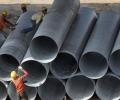
The festive season will mean business for the steel industry as it is the time when automotive and consumer appliance companies bump up demand to prepare for higher sales, experts have said. Ranjan Dhar, chief marketing officer at ArcelorMittal Nippon Steel India (AM/NS India), said that bookings by auto and consumer appliance industries are 20 per cent higher ahead of the festive season compared to last year. "While this could be for a couple of months, it could normalise later at approximately 10 per cent," he said.

Lenders and shareholders of Reliance Industries Ltd (RIL) will meet on May 2 to demerge the firm's financial services business. This is expected to create a big player in segments including the NBFC (non-banking financial company) space with net worth of Rs 25,851 crore as of March 2022. According to the plan, RIL shareholders will get a share in the demerged entity for each one held in the company.

Domestic air passenger traffic was back to the growth trajectory in June amid the falling number of COVID-19 cases in the country with around three million passengers flying on local routes in the previous month as against around two million in May, a report said on Tuesday. Though there is some recovery observed in June, stress on demand continues, driven largely by the second wave of the pandemic, limiting travel to only necessary travel, credit rating agency ICRA said in its report. On a sequential basis, domestic passenger traffic was up 41-42 per cent in June over May.

The Centre and states are likely to budget for higher market borrowings to the tune of Rs 2.3 lakh crore next fiscal even though the Union budget may peg a lower-than-expected fiscal deficit for the Centre at 5.8 per cent of GDP, says a report. Icra Ratings anticipates higher redemptions will lead to gross market borrowings of the Centre to rise to Rs 14.8 lakh crore and of the states to jump by Rs 1.6 lakh crore to Rs 9.6 lakh crore, taking the combined borrowings (of the Centre and the states) to Rs 24.4 lakh crore in FY2024, up by 2.3 lakh crore from FY23 combined. In FY23, the Centre's gross borrowings are budgeted at Rs 14.1 lakh crore and of the states at Rs 8 lakh crore, or a combined borrowing of Rs 22.1 lakh crore, according to the agency.
By no means do economists see the Reserve Bank of India stop at just a 25-bp cut. Some of the economists such as Soumyakanti Ghosh of State Bank of India are of the firm view that rates have room to fall by a total of 75 bps in the current financial year, starting with 25 bps in the August 7 policy.

'We should look at is full year's growth rather than quarter numbers.'

A reversal of policy at this juncture could jeopardise the recent gains on inflation

The RBI has targeted consumer price inflation at 6 per cent by January and 4 per cent by March 2018.

As on March 31, 2019, while the promoter group's stake, including individual promoter shareholders as well as group investment firms, stood at 42.71 per cent, it fell to 38.39 per cent on Tuesday.

Rate sensitive sectors were among the top gainers with Tata Motors and ICICI Bank leading the gains on the Sensex.

For the first time, the country's largest airline IndiGo will soon lease up to four wide-body Boeing 777 planes to cover the shortfall in its international operations, according to officials. The airline said the wet-leasing of "certain aircraft" will be done as an interim measure. IndiGo, which has so far only been operating narrow-body Airbus planes, ATRs and freighters, will now be having wide-body aircraft in its fleet.

From Covid-19 essentials, such as Vitamin C supplements and thermometers, to bicycles, laptops, and personal weighing scales, demand for certain items galloped during last financial year as the pandemic altered what Indians used on a day-to-day basis. Imports of outdoor sports equipment, handbags for women, and dentures, among others, plummeted. With outdoor activities coming to a halt last year and schools functioning virtually, imports of sports goods witnessed a decline, while inbound shipments of laptops and battery chargers saw a sharp uptick, according to the import data for the financial year 2020-21.

SBI will auction two non-performing accounts (NPAs) next month to recover dues of over Rs 313 crore, according to a notice by the lender. The two accounts to be put up for e-auction on August 6 are Bhadreshwar Vidyut Pvt Ltd (BVPL) with a loan outstanding of Rs 262.73 crore and GOL Offshore Ltd with Rs 50.75 crore dues. "In terms of the bank's policy on sale on financial assets, in line with the regulatory guidelines, we place these accounts for sale to ARCs/banks/NBFCs/FIs, on the terms and conditions indicated there against," SBI said in the notice. The reserve price for the auction of Bhadreshwar Vidyut is set at Rs 100.12 crore and for GOL Offshore at Rs 51 crore.

It can be noted that the rupee lost nearly 7 per cent since the beginning of May as FIIs have pulled out nearly $4 billion from the domestic debt, as bond yields fell on expectation of RBI cutting rates on Monday.

Retail inflation fell to a 15-month low of 5.66 per cent in March, mainly due to a decline in food prices, government data showed on Wednesday. The inflation figure in March is within the RBI's comfort zone as it is below 6 per cent. The retail inflation based on Consumer Price Index (CPI) was 6.44 per cent in February 2023 and 6.95 per cent in the year-ago period.
